In This Article
In recent times, the development of various tools and technologies offering extensive features has massively increased. Every third day, some new tools are being launched into the market… a whole flooded situation.
But the most challenging part is adopting new technologies while managing the existing functional ones. Most businesses struggle with tool sprawl due to this.
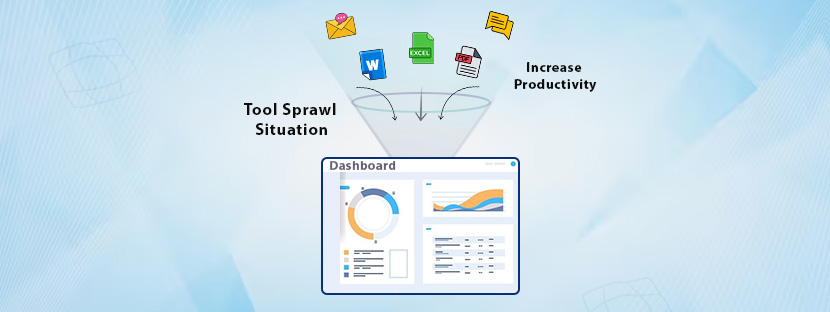
Basically, when businesses use too many tools to monitor their infrastructure and applications, the situation causes tool sprawl. Let’s point out why this happens and how we can solve this forever.
Possible reasons for the tool sprawl situation
Tool sprawl is not only a problem for large companies, but it also makes small businesses suffer, too. Technology is supposed to make life easier, but for many businesses, it brings nightmares. Overlapping, unchecked, underutilized, and redundant tools waste money and cause tool sprawl.
Keeping all these challenges unchecked can cause a serious threat to your team. They have to do their job efficiently, but an excessive number of tools makes their tasks complex. As a result, it mentally hurts your teams and causes issues with productivity. Moreover, the ROI gets negatively impacted, and it creates fragmented workflows within the united organizational structure.
How to overcome tool sprawl (Strategic way)
Technology saves time, and that has been the core reason why businesses have always adopted the latest technology. Sometimes, what happens is that businesses end up having multiple tools to handle various purposes. After a point, it becomes unbearable for teams working in the business to manage multiple tools. That’s when the tool sprawl situation gets created.
Overcoming the tool sprawl situation is your primary responsibility if your team is complaining about multiple tools. Making your working procedure simple and efficient should be your primary goal here.
Let’s check here how you can come out of a tool sprawl situation in the best strategic way.
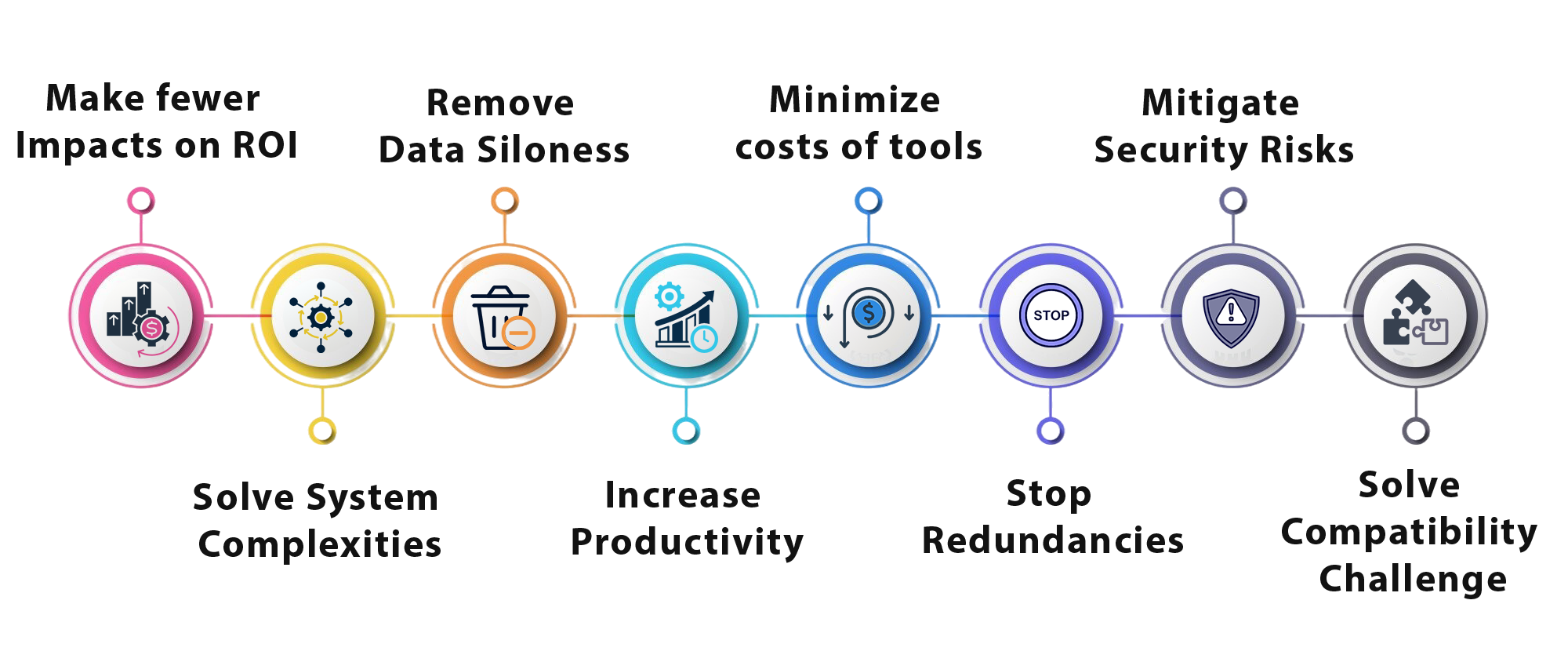
Make fewer impacts on ROI
A team can spend most of its time on disparate tools if the organization is facing a tool sprawl situation. This can take the ROI of the organization down. If the team dedicates itself to spending time on tool management rather than doing meaningful work. It will get you less ROI.
✨ Hence, as a solution, you need to move all your multiple monitoring systems and security tools into a single platform. Therefore, your teams can spend less time switching tabs.
Solve system complexities
Tool sprawl makes day-to-day processes complex. It creates an additional task for your company and teams that kills their productivity. It’s quite natural that integrating all processes or tools under one channel is a time-consuming and resource-intensive process. It may cause downtime in many cases. Consolidating your tools and taking everything under one simple custom dashboard can save you from downtime.
Remove data siloness
A flooded system of tech stack has the worst visibility ever. If the data observability is poor, it will create a silo culture. Each tool requires manual support to get moving through the process. But this will slow other processes, diminish efficiencies, and create major bottlenecks across the system.
Removing the silo culture becomes a priority, and for that, you need to unite your systems. Creating a source of truth for data becomes essential at this stage. This will ignite insight exchange and collaboration within the system.
Increase productivity
With time, tools and processes are becoming complex that handle business operations. Having additional unnecessary tasks just makes the process complex and diminishes productivity. Toolset consolidation is the ideal fit at this point, as it can help your team to stay on the same platform even if they switch tasks. This will improve efficiency and productivity.

Minimize the costs of multiple tools
If your organization purchases a new tool after it’s launched, it can affect the cost matters. Besides the cost of purchasing a new tool, training your teams to use the tools and monitoring their progress requires additional expenses. If you can reduce the numbers, you can save some costs. Because now you don’t need to pay for the licences for managing different tools at all.
Set aside the cost of acquiring different tools; when you consolidate your tools, you can also limit other associate expenses, too. For example, the amount spent on support and tool maintenance.
Stop redundancies
Using multiple tools for the same purpose can only drain money and nothing else. Organizations that do this often end up having multiple tools that serve the same purpose. These redundant tools must not appear anywhere within your organizational procedure.
Mitigate security risks
Fragmented toolsets spread across your system do nothing but pose security threats. Because it makes cybersecurity monitoring and incident response processes slower and further complex. Thus, it creates a gap within the security process and makes it harder to detect them.
Applying the best measures of data consolidation is the way out here. You can take a centralized route to manage your tech stack. Also, ensure that to implement a more complex security system to balance security.
Solve compatibility challenge
One of the biggest issues that tool sprawl creates is incompatibility. One system may support your data format while another system may not. To make your data smoothly float across your systems, you need to remain consistent with your process.