In This Article
Turning raw numbers into revenue-driving strategy shouldn’t require a $500,000 internal payroll budget. That financial reality is driving more US teams toward data analytics outsourcing — letting specialized partners handle complex pipelines while internal teams focus on growth.
But the market is crowded, and sales pitches are polished. A low hourly rate sounds great until you are stuck dealing with overnight communication delays, unexpected scope creep, and vague security policies.
Here are 10 non-negotiable factors US enterprises should evaluate before signing a contract with data analytics outsourcing companies.
1. Evaluate Their Data Analytics Expertise
The first question should be simple:
Can the provider actually perform the type of analytics your business needs?
Data analytics is a broad discipline. A company may have dashboard development but limited experience with predictive analytics. Another may specialize in data engineering but have little experience translating customer or marketing data into business insights.
Look for experience relevant to your specific requirements, such as:
● Data mining
● Business intelligence
● Statistical analysis
● Predictive analytics
● Customer analytics
● Marketing analytics
● Data visualization
● Reporting automation
You should also check whether the provider can work across your existing data environment.
For example, ask:
⁍ Which databases and data warehouses do you support?
⁍ Can you work with our CRM and business systems?
⁍ How do you handle multiple data sources?
⁍ How do you validate data before analysis?
⁍ Can you automate recurring analytics workflows?
⁍ How do you document analytical processes?
A capable provider should be able to explain its approach in business terms, not just list software tools.
2. Check Industry and Business-Domain Experience
Technical expertise is important, but context matters just as much.
An analytics team can produce technically correct results that are still not useful if it does not understand the business problem behind the data.
For example, analytics requirements can be very different for:
✔ E-commerce
✔ Financial services
✔ Healthcare
✔ SaaS
✔ Manufacturing
✔ Retail
✔ Marketing agencies
✔ B2B businesses
Industry experience can shorten the learning curve and help the provider understand which metrics actually matter.
However, you don’t necessarily need a provider that works exclusively within your industry. More important is whether the team has experience solving similar analytical problems.
Ask potential providers for relevant examples and case studies. Don’t only look for recognizable client names. Look for evidence of what they actually delivered and what business problem it addressed.
3. Assess Data Security and Privacy Practices
This should be one of the highest-priority evaluation criteria, particularly when an external provider will access customer, financial, operational, or other sensitive business information.
Before sharing data, ask:
Who can access our data?
How is access controlled?
Where is the data processed and stored?
Is data encrypted during transmission and storage?
How are credentials managed?
How are security incidents reported?
What happens to our data when the engagement ends?
Are subcontractors involved?
Can you work within our security requirements?
Don’t just accept a statement like “your data is secure.”
Ask for evidence of the processes and controls behind that claim.
NIST’s guidance for small businesses specifically warns that using an outside analytics provider does not automatically mean privacy responsibilities disappear. Businesses should verify how providers use customer information, address incident notification, and incorporate privacy requirements into their relationship.
For larger organizations, security and privacy requirements should also be reflected in contracts and service-level agreements. NIST guidance on external service providers emphasizes defining organizational requirements, roles, responsibilities, and ongoing monitoring.
4. Examine Their Data Quality and Validation Process
Analytics is only as reliable as the underlying data.
A provider should therefore have a defined process for identifying and handling:
◉ Duplicate records
◉ Missing values
◉ Incorrect formats
◉ Outliers
◉ Inconsistent fields
◉ Conflicting records
◉ Outdated information
◉ Source-system errors
Ask potential providers:
➱ How do you determine whether the data is ready for analysis?
A strong provider should be able to explain its data-quality process before moving into dashboards or advanced analytics.
This is particularly important when data is collected from multiple systems.
For example, if customer information exists across a CRM, marketing platform, e-commerce system, and support platform, differences in naming conventions or identifiers can produce misleading results.
A good analytics partner should help establish a reliable foundation before interpreting the numbers.
5. Look at Their Technology and Analytics Stack
You should understand whether a provider’s technical environment is compatible with your organization.
Depending on your requirements, this could include experience with:
◉ SQL
◉ Python
◉ R
◉ Cloud data platforms
◉ Data warehouses
◉ Business intelligence platforms
◉ Data visualization tools
◉ APIs
◉ ETL/ELT workflows
◉ Machine learning platforms
◉ Automated reporting systems
But avoid choosing a provider simply because it mentions a long list of technologies.
Tools are not the same as capability.
The more useful question is:
Can the provider use the appropriate technology to solve our particular data problem efficiently and reliably?
For example, if your primary requirement is recurring business reporting, an elaborate machine-learning architecture may be unnecessary.
If you need forecasting or customer segmentation, however, the provider should demonstrate appropriate statistical or machine-learning expertise.
6. Evaluate Scalability
Your analytics requirements may change as your business grows.
A provider that works well for 100,000 records may not necessarily be prepared to handle ten times that volume.
Ask how the provider handles:
✔ Increasing data volumes
✔ Additional data sources
✔ More frequent reporting
✔ New analytical requirements
✔ Additional users
✔ Larger dashboards
✔ More complex models
✔ Multiple business units
A flexible outsourcing arrangement should allow you to increase or reduce analytical capacity without completely restructuring the relationship.
This is particularly valuable for growing businesses that may not yet know exactly how their analytics requirements will evolve.
7. Review Communication and Collaboration
A technically excellent analytics team can still become a poor outsourcing partner if communication is difficult.
This becomes especially important when working with an offshore or geographically distributed team.
Before selecting a provider, clarify:
Who will be your primary contact?
How frequently will you receive updates?
Which communication channels will be used?
What are the expected response times?
How are issues escalated?
What working hours overlap with your US team?
Who explains analytical findings to business stakeholders?
You should also determine whether the provider can communicate with non-technical stakeholders.
An analyst who can produce a sophisticated report but cannot explain what it means for sales, operations, marketing, or management is unlikely to deliver maximum business value.
Industry guidance on analytics outsourcing similarly emphasizes communication and business understanding alongside technical expertise.
8. Understand the SLA, Reporting, and Quality Controls
Before signing an agreement, make sure expectations are measurable.
A strong outsourcing engagement should clearly define:
Scope of services
Deliverables
Reporting frequency
Turnaround expectations
Quality standards
Error-resolution procedures
Escalation process
Review cycles
Responsibilities of both parties
For recurring analytics services, determine what happens if a report is delayed or a data-quality issue affects a deliverable.
Your agreement should also clarify who owns responsibility for different parts of the workflow.
NIST’s guidance on external service providers highlights the importance of documented responsibilities, security requirements, oversight, and monitoring when organizations rely on third-party services.
9. Compare Pricing Based on Value, Not Just Cost
Pricing will naturally influence your decision, but comparing providers solely on hourly rates can lead to poor decisions.
Two companies may quote very different prices because their scopes are different.
For example, one provider might include:
➢ Data preparation
➢ Quality checks
➢ Analysis
➢ Dashboard development
➢ Reporting
➢ Ongoing support
while another may charge separately for each component.
Ask providers to explain:
→ What is included?
→ What is excluded?
→ What pricing model is used?
→ What happens when requirements change?
A transparent management process can prevent unexpected issues later.
The objective should be finding the provider that offers the best combination of capability, reliability, scalability, security, and business value for your requirements.
10. Ask for References, Case Studies, and Proof of Performance
Finally, ask the provider to demonstrate that it can deliver what it promises.
Look for
➭ Relevant case studies
➭ Client references
➭ Measurable outcomes
➭ Sample reporting approaches
➭ Process documentation
➭ Testimonials
➭ Relevant certifications or security documentation where applicable
Don’t be impressed only by a portfolio of logos.
Ask:
➛ What problem did you solve?
➛ What did you actually deliver?
➛ How was quality measured?
➛ How did the engagement evolve?
➛ What measurable improvement resulted?
If possible, give shortlisted providers a realistic example of the type of analytics problem your business faces and ask them to explain how they would approach it.
This can reveal far more than a generic sales presentation.
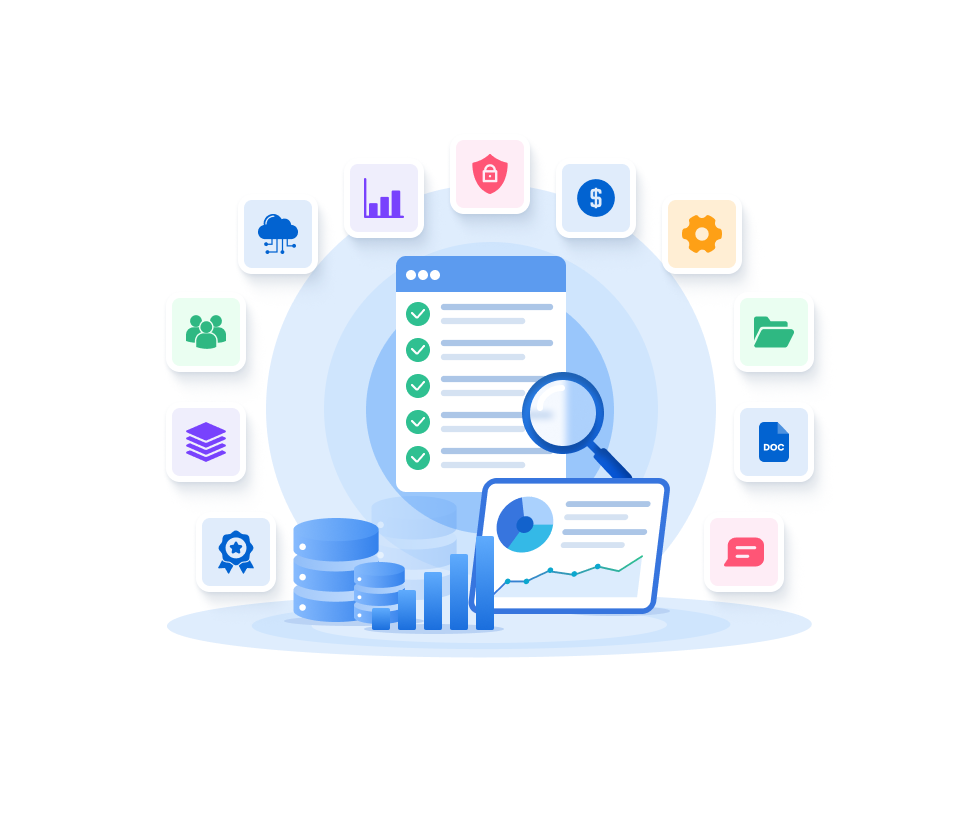
Data Analytics Outsourcing Company Evaluation Checklist
| Evaluation Factor | Questions to Ask |
|---|---|
| Analytics expertise | Can they perform the analytics we actually need? |
| Industry experience | Have they solved similar business problems? |
| Data security | How is our information protected? |
| Data quality | How do they validate and clean source data? |
| Technology | Can they work with our existing data environment? |
| Scalability | Can the service grow with our requirements? |
| Communication | Can US teams collaborate effectively with them? |
| SLA & quality | Are deliverables and responsibilities clearly defined? |
| Pricing | Is the pricing transparent and aligned with scope? |
| Track record | Can they demonstrate relevant results? |
You can also assign each provider a score from 1 to 5 for every category.
This prevents a strong sales presentation or low price from disproportionately influencing the final decision.
Red Flags to Watch for When Choosing an Analytics Outsourcing Partner
Not every analytics outsourcing provider will be the right fit for your business. A polished website, attractive pricing, or a long list of technologies does not necessarily indicate strong delivery capabilities.
Before choosing a partner, watch for these warning signs:
Unusually Low Pricing
A significantly lower quote may look attractive initially, but it can sometimes indicate limited scope, inexperienced resources, insufficient quality controls, or additional costs that appear later.
Instead of comparing hourly rates alone, compare the total scope of services, expertise, quality controls, support, and expected outcomes included in each proposal.
Vague Answers About Data Security
If a provider cannot clearly explain how your data will be accessed, processed, stored, protected, and deleted, treat that as a warning sign.
Ask specific questions about:
➙ Access controls
➙ Data encryption
➙ User permissions
➙ Data storage
➙ Incident response
➙ Data retention
➙ Subcontractors
➙ Secure data transfer
➙ End-of-engagement data handling
The Federal Trade Commission (FTC) recommends investigating a service provider’s security practices before outsourcing, putting security expectations into contracts, and verifying that providers comply with those requirements.
Technology-First Sales Pitches
A provider may highlight an impressive list of tools, platforms, programming languages, AI capabilities, or dashboards.
That alone does not demonstrate analytical expertise.
A stronger provider should be able to explain how its technology will solve your particular business problem, improve data quality, reduce manual work, generate useful insights, or support better decision-making.
No Relevant Case Studies or Evidence
Be cautious if a provider makes broad claims about its capabilities but cannot demonstrate relevant experience.
Look for evidence related to:
⮚ Similar data volumes
⮚ Similar analytics requirements
⮚ Similar industries or business models
⮚ Relevant reporting or BI work
⮚ Data quality and preparation
⮚ Predictive or customer analytics
⮚ Measurable business outcomes
Client logos can provide some context, but specific examples of work and outcomes are much more useful when evaluating a potential partner.
Unclear Ownership and Responsibilities
Analytics outsourcing involves multiple parties, so responsibilities should be clearly defined.
You should know:
⮩ Who owns the data
⮩ Who is responsible for data quality
⮩ Who approves analytical requirements
⮩ Who reviews deliverables
⮩ Who handles errors
⮩ Who communicates with your internal team
⮩ Who is responsible for security-related issues
If these responsibilities remain unclear during the evaluation stage, they can become larger problems after the engagement begins.
Poor Communication During the Sales Process
Communication problems before the contract are worth taking seriously.
If a provider is slow to respond, repeatedly misunderstands your requirements, avoids direct questions, or cannot explain technical concepts in business terms, the same problems may continue during delivery.
For US businesses working with offshore or distributed teams, also evaluate time-zone overlap, response expectations, escalation procedures, and the availability of a dedicated point of contact.
Rigid Engagement Models
Your analytics requirements may change as your business grows.
A provider that cannot accommodate additional datasets, reporting requirements, analytical workloads, or changes in project scope may become difficult to work with over time.
Look for a partner that can offer an engagement model appropriate to your needs, whether that means:
▶ Project-based analytics
▶ Dedicated analytics resources
▶ Recurring reporting
▶ Managed analytics support
▶ A hybrid model
No Clear Quality Assurance Process
A provider should be able to explain how it checks its work before delivering analytics or reports.
Ask about:
✓ Data validation
✓ Duplicate and error checks
✓ Analytical review
✓ Dashboard testing
✓ Output verification
✓ Quality-control procedures
✓ Error correction
If the provider’s answer is simply “our analysts review everything,” ask for more detail about what is reviewed, when it is reviewed, and how errors are tracked and corrected.
Pressure to Sign Before Due Diligence
Be cautious if a provider pushes you to sign quickly without giving your team adequate time to review the scope, security requirements, pricing, deliverables, or contractual terms.
A reliable outsourcing relationship should allow both sides to establish expectations before work begins.
Promises That Sound Too Good to Be True
Be skeptical of claims such as:
→ Guaranteed business growth
→ Immediate transformation
→ Perfect data quality
→ Unlimited analytics
→ Dramatically lower costs with no trade-offs
→ Advanced AI capabilities without explaining the underlying process
Good analytics providers should be confident about their capabilities while remaining realistic about what depends on data quality, business requirements, implementation, and client-side inputs.
What to Do If You Spot These Red Flags
One red flag does not necessarily mean you should eliminate a provider immediately. Instead, use it as a reason to ask more questions and request evidence.
Before making a final decision, compare shortlisted providers against the same criteria for expertise, security, data quality, communication, scalability, pricing, quality assurance, and proven performance.
The objective is not to find the cheapest analytics outsourcing company. It is to find a partner that can reliably handle your data, understand your business requirements, maintain appropriate controls, and deliver useful analytical outcomes at a sustainable cost.
Data Analytics Outsourcing vs. Building an In-House Team
Outsourcing is not automatically the right choice for every company.
An internal analytics team may make sense when an organization requires continuous, highly specialized analytics capabilities and has the resources to recruit and retain the necessary talent.
Outsourcing can make more sense when a business:
⤷ Needs additional analytics capacity
⤷ Wants access to specialized skills
⤷ Has recurring analytics workloads
⤷ Needs to scale quickly
⤷ Wants to reduce internal operational workload
⤷ Has limited analytics resources
⤷ Needs support for specific projects
⤷ Wants external assistance with data preparation, reporting, or analysis
A hybrid model can also work well.
For example, internal teams can retain ownership of analytics strategy and business decisions while an external partner manages recurring data preparation, reporting, visualization, enrichment, or analytical workloads.
The right model ultimately depends on your organization’s data maturity, internal capabilities, budget, and long-term objectives.
Final Thoughts: Choosing the Right Data Analytics Outsourcing Partner
Selecting among data analytics outsourcing companies should not be treated as a simple vendor-price comparison.
The right partner should work with your data reliably, protect sensitive information, understand your business objectives, communicate effectively with your team, and scale as your requirements change.
The most important factors to evaluate are therefore:
⇒ Analytics expertise
⇒ Relevant business experience
⇒ Data security and privacy
⇒ Data quality processes
⇒ Technology capabilities
⇒ Scalability
⇒ Communication
⇒ SLAs and quality controls
⇒ Transparent pricing
⇒ Proven performance
A good outsourcing relationship should ultimately do more than produce dashboards or reports. It should help your organization turn fragmented data into information that supports faster, better-informed business decisions.
Taking the time to evaluate security standards, daily communication models, and technical fit upfront ensures you build a reliable extension of your team. To learn more about our approach and how we support US organizations with secure, scalable data operations, explore InputiX.